Head Tracked View Assist
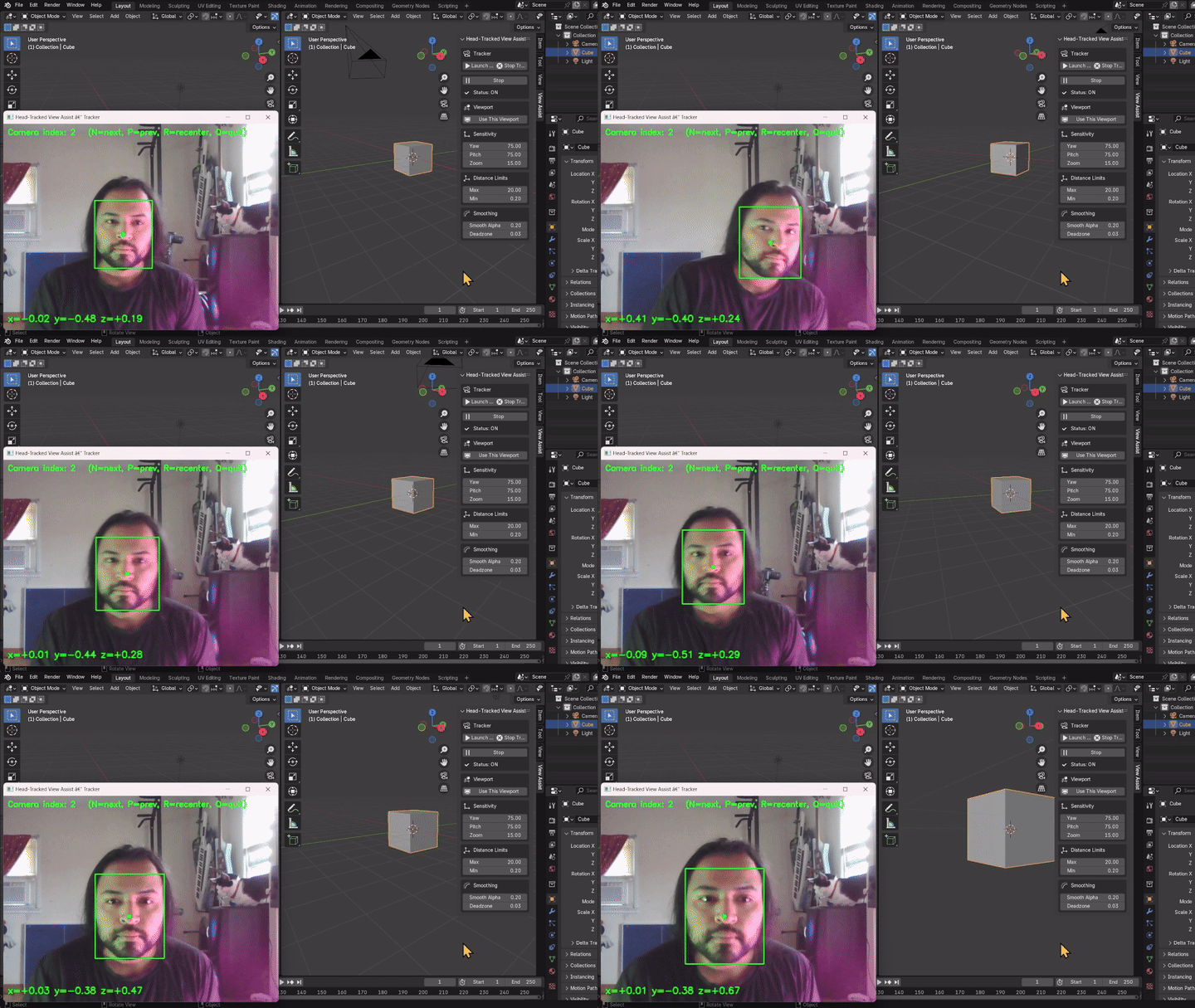
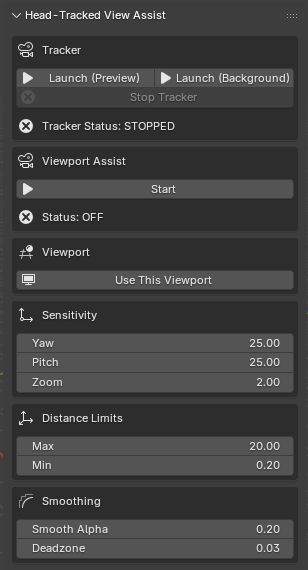
The Head Tracked View Assist is a system that uses computer vision–based head tracking to create dynamic parallax within the Blender viewport, allowing users to explore 3D scenes through natural head movement.
Using real-time pose estimation from a standard webcam, the add-on maps user motion to camera transformations, producing an illusion of depth similar to looking through a physical window into the virtual environment. This interaction model explores alternative input methods for spatial navigation beyond traditional mouse and keyboard controls.
The project demonstrates the integration of computer vision, real-time graphics, and interactive software design within a production-grade 3D application. It also reflects broader interests in human–computer interaction, immersive interfaces, and the development of tools that make digital environments feel more physically grounded.
Potential applications include virtual production, accessibility tools, educational visualization, and future XR workflows where natural motion becomes a primary input modality.
Harmonica Simulator AR
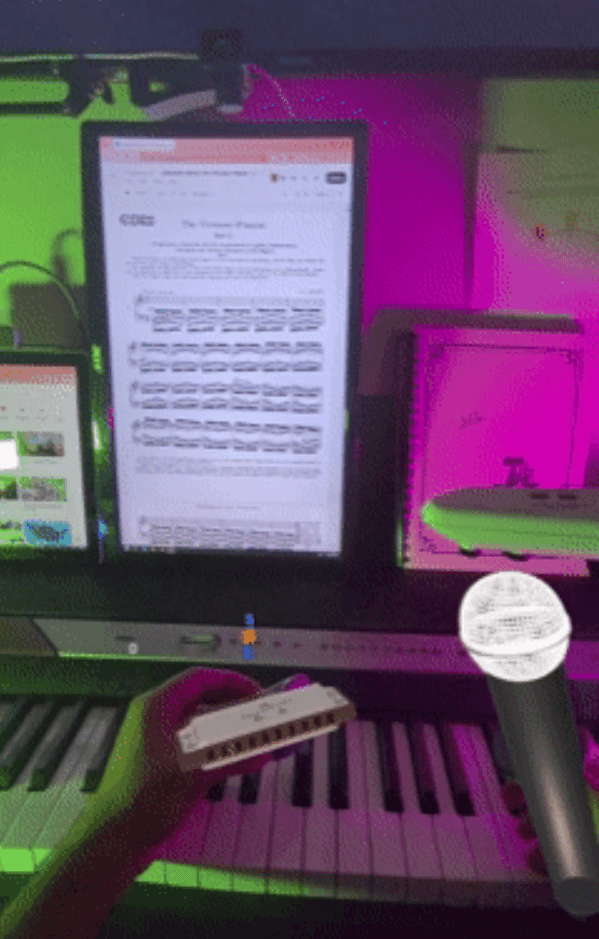
The Augmented Reality Harmonica Simulator is an interactive musical instrument prototype developed in Unity for Android Oculus apk, designed to explore expressive input and real-time audio generation in virtual reality.
The application simulates the experience of playing a harmonica using motion tracking and spatial interaction, allowing users to produce notes through natural gestures rather than traditional physical controls. By translating embodied movement into sound, the project investigates how AR can support creative expression and skill development without requiring physical instruments.
Built for standalone deployment on the Quest platform, the simulator emphasizes low-latency interaction, intuitive control design, and immersive feedback to maintain a responsive playing experience. The project also required optimization for mobile XR hardware while preserving audio quality and usability.
This work reflects broader interests in XR interfaces, digital instrument design, and the use of immersive technology as a platform for learning, creativity, and accessibility. Potential applications include music education, rehabilitation, virtual performance, and experimental interaction research.
 IndoorDragon